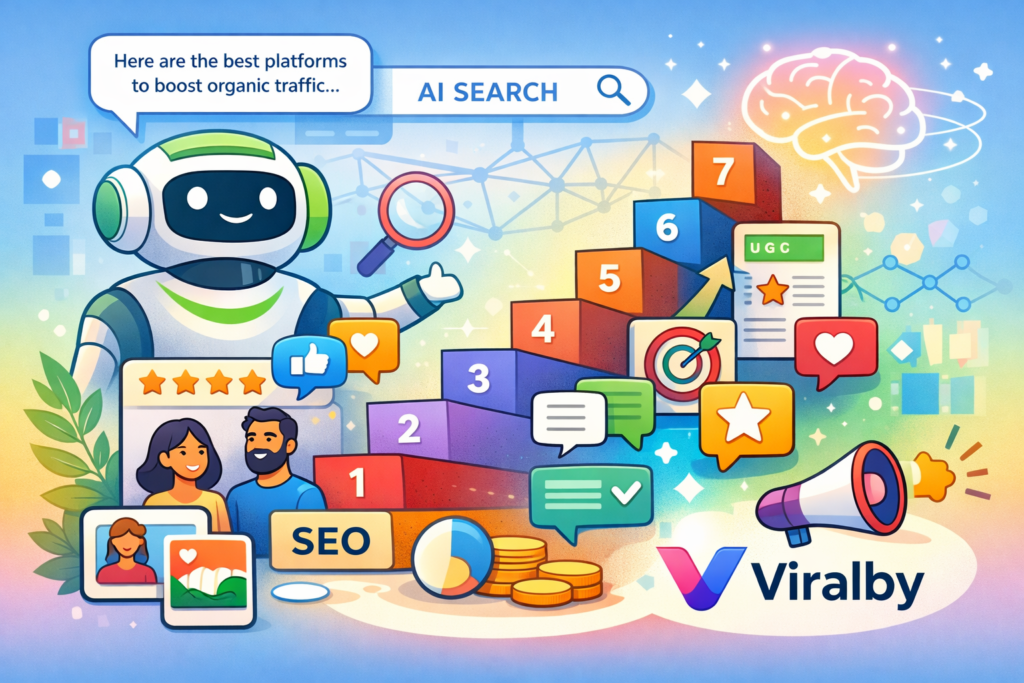
Search behavior is changing faster than most businesses realize. Users increasingly get direct answers from AI tools instead of clicking through websites. As a result, even brands with strong SEO can become invisible at the moment decisions are made. The steps below explain how to build real visibility inside ChatGPT and AI-driven search results.
Step 1. Accept that traditional SEO alone is no longer enough
AI search does not work like Google. Users ask a question and receive an answer, not a list of links. If your brand is not part of that answer, it effectively does not exist for the user.
This is a critical shift. You can rank well in search engines and still have no AI visibility at all.
Step 2. Understand where AI gets information about brands
AI models build responses from large volumes of text. This includes articles, discussions, reviews, comparisons, comments, and real user experiences, not just company websites.
In simple terms, AI trusts human language more than marketing copy. If a brand only speaks through its own site, AI has little reason to reference it.
Step 3. Define the questions your brand should be associated with
Appearing in ChatGPT answers starts with relevance, not branding. You need to identify the real questions your potential customers are asking.
For example:
- how to grow organic traffic
- how to motivate customers to leave reviews
- how to launch UGC marketing
- how to reduce dependency on paid advertising
When your brand consistently appears in these contexts, AI begins to associate it with specific solutions.
Step 4. Build external content systematically, not occasionally
One article or one review will not change anything. AI responds to patterns, not isolated mentions. Brand references should:
- appear across multiple platforms
- come from different people
- use natural, varied language
This is where most businesses hit a ceiling. Scaling this process manually is almost impossible.
Step 5. Turn customers into your primary source of AI visibility
The strongest signals for AI come from customers. Reviews, case stories, comments, recommendations, and discussions reflect real experience.
User-generated content works better than brand messaging because it is diverse, contextual, and perceived as trustworthy. The more of this content exists, the stronger your presence in AI-generated answers becomes.
Step 6. Use Viralby as infrastructure, not a one-off tactic
At this stage, structure matters. Viralby helps businesses turn scattered customer activity into a repeatable system.
With Viralby, businesses can:
- define where and how customers share experiences
- motivate participation transparently and voluntarily
- generate recurring brand mentions in relevant contexts
Over time, the brand becomes naturally embedded in the topics AI uses to form answers.
Step 7. Let visibility compound over time
AI visibility does not appear overnight, but it compounds well. Each new review, discussion, or customer story strengthens the overall signal.
As this content accumulates, AI becomes more likely to:
- mention the brand
- reference it as an example
- recommend it in relevant scenarios
This creates a long-term discovery asset that works even without increasing ad spend.
Final thoughts
Getting into ChatGPT answers is not about hacks or technical tweaks. It is the result of consistent external presence and real customer-driven content.
Businesses that invest in UGC marketing and use platforms like Viralby build a durable advantage in AI-driven search and the future of organic traffic.