When businesses introduce customer tasks into their marketing strategy, the same problem appears again and again. Some tasks get completed instantly and at scale, while others remain untouched even when rewards are increased.
This difference has little to do with motivation or incentives. It comes down to psychology. Customers are willing to complete tasks that feel natural, require minimal effort, and make sense within their everyday behavior.
Below are five task types that consistently generate the highest customer engagement and deliver real user generated content without friction.
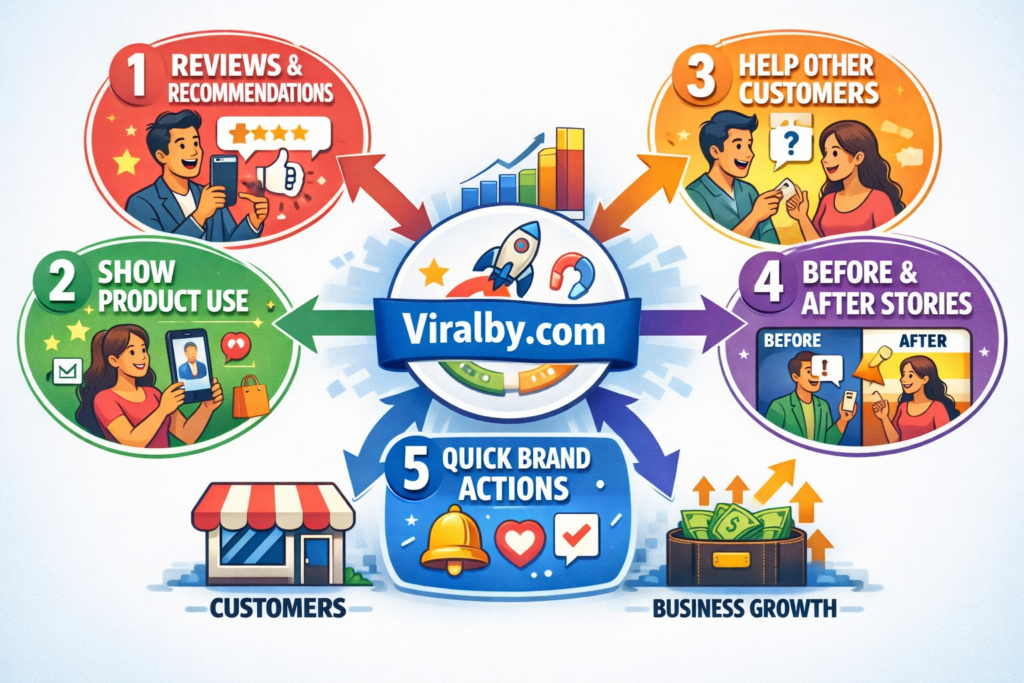
1. Reviews and short recommendations based on real experience
This is the simplest and most reliable task format.
When a customer has already used a product or service, leaving a short review does not feel like marketing. It feels like closing the loop on their experience. The key is asking the right question. Not “promote us,” but “what was your experience?” or “who would this be useful for?”
These tasks work especially well for SMBs, SaaS products, and subscription services where trust directly influences conversion. For businesses, this is one of the most stable sources of user generated content and social proof.
2. Show how you use the product in real life
People naturally like to share what has already become part of their routine.
Tasks that ask customers to post a photo, story, or short video showing how they use a product feel effortless. There is no need to explain or persuade. Customers simply document reality.
This format performs extremely well in e-commerce, EdTech, and digital services. It creates authentic visuals that later work across product pages, ads, and landing pages. In terms of customer engagement, this is one of the lowest-friction task types available.
3. Helping other customers by answering questions
People enjoy feeling helpful and knowledgeable.
Tasks that involve answering questions from new users or sharing a tip based on personal experience feel like community participation rather than promotion. This format is particularly powerful for SaaS platforms, marketplaces, and educational products.
Beyond content generation, these tasks reduce support load and increase trust between users. From an engagement perspective, customer tasks that help others tend to be completed more willingly than promotional posts.
4. Personal stories in a before-and-after format
Customers are far more willing to share change than to sell.
Tasks that focus on personal transformation – improved results, saved time, simplified workflows, or gained skills – feel like storytelling, not marketing. The key is keeping the format simple and realistic, without demanding polished case studies or complex metrics.
For brands, these stories are a powerful form of customer-driven marketing. They perform well in SEO, recommendations, and increasingly in AI-powered search results.
5. Lightweight actions inside the brand ecosystem
Sometimes the most completed tasks do not involve content at all.
Subscribing to a channel, voting in a poll, saving content, leaving short feedback, or reacting after a purchase are actions that require minimal effort and no public exposure. These tasks are ideal entry points for deeper engagement later.
For marketing teams, this type of customer engagement helps maintain constant interaction without overwhelming the audience.
Why these tasks outperform others
Despite their differences, all five task types share common characteristics.
They do not require customers to think like marketers.
They are based on real experiences rather than imagination.
They fit naturally into everyday behavior.
They give customers a sense of usefulness or recognition.
That is why these UGC tasks scale consistently and do not lose effectiveness over time.
How to implement these tasks with Viralby
A common mistake businesses make is launching all task formats at once without structure.
With Viralby, these task types can be organized into a clear progression. Customers start with simple actions and reviews, move into product usage content and peer support, and eventually share deeper stories and experiences.
Viralby allows businesses to define clear but flexible requirements, automatically verify task completion, and reward customers instantly. As a result, Viralby tasks feel like part of the user experience, not forced marketing activity.
For SMBs and marketing teams, this approach delivers a steady stream of authentic content, recommendations, and engagement without relying on discounts or constant promotions.