By 2026, UGC marketing is no longer an optional add-on to paid acquisition. For many brands, it has become a core growth channel as ad costs rise, trust in traditional advertising declines, and AI-driven discovery reshapes how customers find products.
Customers trust other customers far more than brand messaging. This shift has created an entire ecosystem of UGC marketing tools, each solving a different part of the problem. Some focus on reviews, others on social content, referrals, or community building. Only a few address the full lifecycle of customer engagement.
Below is a structured overview of the main categories, real platform examples, and how they compare.
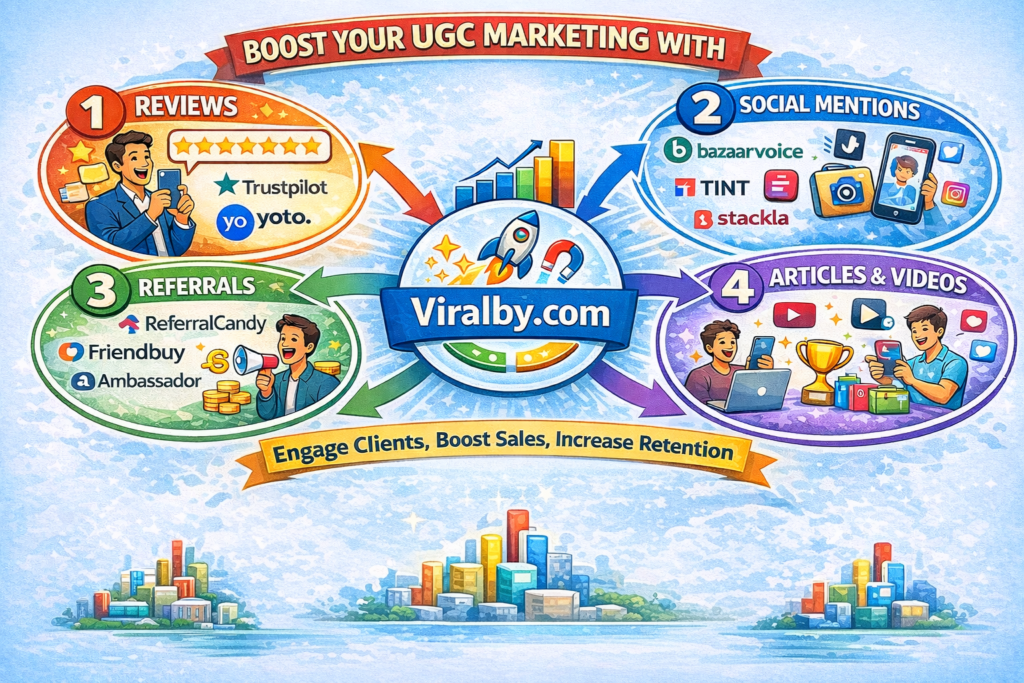
Review and reputation platforms
These tools focus on collecting reviews, ratings, and testimonials and displaying them on websites or third-party platforms.
Well-known examples include:
- Trustpilot – https://www.trustpilot.com
- Yotpo – https://www.yotpo.com
- Reviews.io – https://www.reviews.io
They are effective for building baseline trust and social proof, especially in e-commerce. However, engagement is mostly one-time. Customers leave a review and rarely interact again. From a long-term user generated content perspective, these platforms are limited.
UGC management and content aggregation platforms
These platforms collect content from social networks, moderate it, and repurpose it across marketing channels.
Common examples:
- Bazaarvoice – https://www.bazaarvoice.com
- TINT – https://www.tintup.com
- Stackla (Nosto) – https://www.nosto.com/
They work well for brands that already have an active audience creating content organically. The main limitation is motivation. Content appears when users feel like posting, not because there is a structured system encouraging participation.
Referral and ambassador marketing platforms
Referral tools focus on customer-to-customer acquisition through incentives.
Popular platforms include:
- ReferralCandy – https://www.referralcandy.com
- Friendbuy – https://www.friendbuy.com
- Ambassador – https://www.getambassador.com
These solutions perform well for short-term growth but often struggle with consistency. Engagement tends to drop once referrals slow down. They rarely produce reusable user generated content beyond links and codes.
Gamified UGC platforms (new generation)
This category represents the biggest shift in the market. These platforms combine customer tasks, rewards, engagement loops, and content creation into a single system.
Viralby – https://viralby.com
Viralby approaches UGC marketing as a process, not a campaign. Customers complete simple tasks such as sharing experiences, publishing content, answering questions, or recommending products. Businesses receive a continuous stream of authentic content that impacts SEO, organic traffic, repeat purchases, and AI search visibility.
The key difference is repeatability. Customers are motivated to return and participate again, which turns UGC into a sustainable growth engine.
Why tools like Viralby matter in 2026
The market is moving away from isolated tools toward integrated systems. Collecting content is no longer enough. Brands need repeatable mechanisms that turn customers into active contributors, not passive reviewers.
Viralby focuses on customer engagement as a long-term asset. Instead of one-off actions, it builds structured participation that drives content, trust, and revenue simultaneously. This makes it less of a marketing tool and more of a growth infrastructure.