Sales gamification is no longer about badges and playful interfaces. For EdTech, SaaS, and marketplaces, it has become a practical way to improve customer retention and drive repeat purchases without endlessly increasing discounts or ad budgets. The key is simple: gamification must reinforce behaviors that directly support revenue, not just add visual flair.
Below are six mechanics that consistently show real results when implemented thoughtfully and with clear business goals.
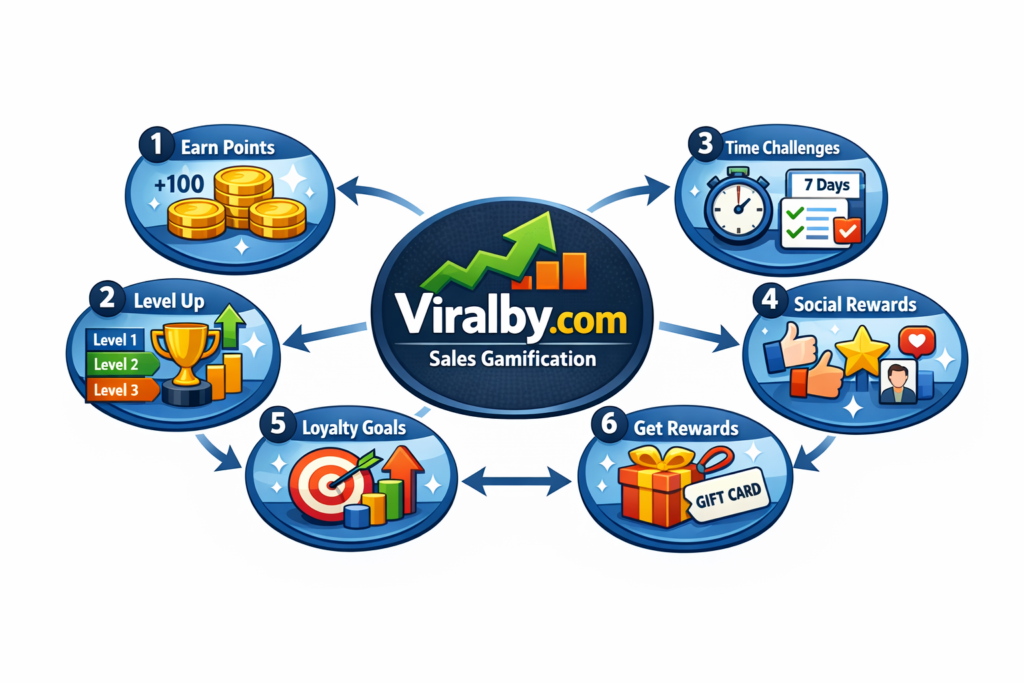
1) Rewarding valuable actions, not just payments
When customers earn rewards only for spending money, loyalty programs quickly turn into permanent sales campaigns. Stronger results appear when points are given for actions that help the business grow: writing a review, recommending a product, sharing a photo, publishing a short use case, or completing a learning milestone.
This approach naturally increases customer engagement while generating social proof. In EdTech, it may be completing assignments or sharing progress. In SaaS, publishing a review or onboarding story. In marketplaces, uploading product photos or rating sellers.
2) Levels and visible progress instead of one-time bonuses
One-time rewards create short-term spikes. Progress creates habits. When customers see a clear journey – from beginner to advanced user or brand advocate – participation becomes part of their routine.
From a loyalty mechanics perspective, visible progress keeps users active even when discounts are not aggressive. SaaS platforms can unlock features or priority support, EdTech can offer certificates or mentor sessions, and marketplaces can provide free shipping or early access to promotions.
3) Short challenges with clear deadlines
Even motivated users delay action. Time-limited challenges remove friction and bring people back into the product at the right moment.
Simple challenges work best: leave a review, share a photo, recommend a friend using a ready-made message, complete a lesson this week. These mechanics are especially effective during the first 30 days, when returning customers habits are formed.
4) Accumulated value customers do not want to lose
Loss aversion is powerful. When customers have accumulated status, points, or access to benefits, leaving feels costly.
The key is making accumulated value meaningful. Points should unlock tangible benefits: a free month, expanded limits, premium support, partner services, or delivery perks. When value feels real, repeat purchases follow naturally.
5) Social elements without toxic competition
Leaderboards and badges can strengthen customer engagement, but only when they feel inclusive rather than stressful. Most users want recognition, not pressure.
In EdTech, group progress and shared milestones feel natural. In SaaS, recognition for helping others or contributing feedback works well. In marketplaces, trusted buyer statuses or highlighted reviews help build credibility and trust.
6) Clear rewards connected directly to the product
Gamification fails when rewards feel abstract or irrelevant. The strongest systems tie rewards closely to the product itself and answer a simple question: “Why is this useful for me?”
Examples by business type:
- EdTech: access to extra lessons, mentor sessions, discounts on future courses, early access to programs
- SaaS: free months, higher limits, priority support, access to closed features
- Marketplaces: free delivery, personalized offers, bonuses for next purchases, partner gifts
This is where sales gamification moves from decoration to a real growth mechanism.
Turning gamification into revenue, not just activity
A common mistake is measuring clicks, points, and tasks while ignoring revenue. A healthier approach is to tie each mechanic to one outcome: higher customer retention, more repeat purchases, or stronger trust through reviews and recommendations that improve conversion.
The safest way to start is small. Launch one mechanic for two or three weeks, track results, then scale what works. This keeps the system organic and manageable.
With Viralby, these mechanics are easy to assemble into clear campaigns. Businesses define simple customer actions, assign rewards, track results, and gradually scale successful patterns. For companies focused on increasing customer retention and repeat purchases without growing ad spend, this approach often delivers the fastest and most predictable results.